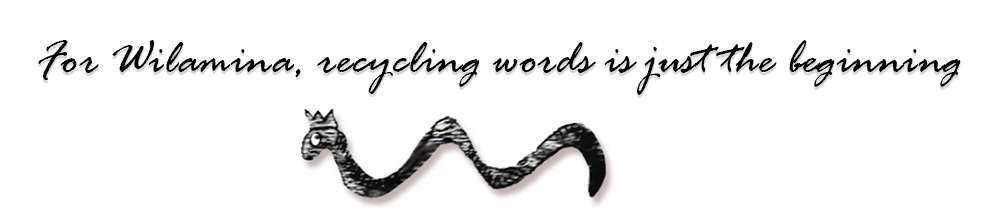
Environmental Literacy Through Interactive Storytelling
Wilamina Shakespeare is a character-driven learning platform that teaches early literacy (ages 3-13) through environmental education. By integrating alphabet recognition, phonics, and language development with recycling awareness and natural systems education, we're creating a generation of environmentally conscious, confident communicators.
Our innovative distribution strategy places FREE books at recycling centers nationwide, meeting families at the point of environmental action and driving app adoption through trusted community partners.
SEEKING: $35,000-$50,000 in seed funding to develop MVP and pilot program.
THE OPPORTUNITY
The Problem:
- Early literacy skills predict lifelong academic success, yet engaging content remains scarce
- Environmental education typically begins too late when values are already formed
- Recycling programs struggle with public education and family engagement
- Quality educational apps are expensive and inaccessible to many families
Our Solution:
- Wilamina Shakespeare combines proven literacy education methods (music, repetition, interactive play) with environmental stewardship, delivered through:
- FREE physical books distributed at recycling centers
- Interactive web and mobile apps with age-adaptive content
- Character-driven storytelling that makes learning joyful
- "Learning Landscapes"™ methodology where skills build systematically
THE CHARACTER & STORY
Wilamina is a bookworm living in a children's library who discovers an urgent message: "Bugs don't litter -
people do!" Her adventures to share this message create natural opportunities to teach:
- Literacy skills (alphabet, phonics, sight words, vocabulary)
- Environmental concepts (recycling, natural cycles, conservation)
- Social-emotional learning (persistence, problem-solving, empathy)
- Critical thinking (systems thinking, cause-effect relationships)
Her perspective "from the bottom of the food chain" mirrors early childhood experience - feeling small in a big world, discovering agency, learning that individual actions matter.
EDUCATIONAL APPROACH
Learning Landscapes™ Methodology:
Our proprietary approach "recycles" effective words and concepts through repetition and application, just as
we recycle physical materials. Starting with sounds and letters, children build vocabulary and confidence that
transfers to real-world communication.
Multi-Domain Learning:
Each story segment addresses multiple educational domains simultaneously:
LITERACY DEVELOPMENT
- Letter recognition and formation
- Phonemic awareness through rhyme and rhythm
- Sight word acquisition in context
- Vocabulary expansion
- Sequencing and narrative comprehension
NUMERACY & PATTERNS
- Counting and number sequence
- Pattern recognition
- One-to-one correspondence
- Spatial reasoning
SCIENCE & ENVIRONMENT
- Natural recycling systems (water cycle, decomposition)
- Ecosystems and interconnection
- Cause and effect
- Observation and inquiry skills
- Environmental stewardship
SOCIAL-EMOTIONAL LEARNING
- Persistence through challenges
- Growth mindset ("I can't do it YET")
- Empathy and perspective-taking
- Self-efficacy and agency
- Emotional regulation
PHYSICAL DEVELOPMENT
- Fine motor skills (clicking, dragging, tracing)
- Gross motor skills (hand motions with songs)
- Hand-eye coordination
- Body awareness
- Rhythm and Rhyme for memory skills
EVIDENCE-BASED PEDAGOGY
Music & Rhythm Integration:
Research shows musical learning improves language retention by up to 40% (Patel, 2011). Our water cycle song
and other musical elements create memorable "hooks" that persist long after screen time ends.
Spaced Repetition:
The "recycling words" methodology employs proven spaced repetition techniques, strengthening neural pathways
through strategic re-exposure.
Interactive Engagement:
Active participation (clicking, dragging, singing) increases retention compared to passive viewing by 75%
(Dale's Cone of Learning).
Competency-Based Progression:
Children advance based on demonstrated mastery, not arbitrary age gates. This respects individual differences
and prevents both boredom and frustration.
Standards Alignment:
- Common Core ELA: Foundational Skills, Language Development
- NGSS: Earth Systems, Human Impact on Environment
- Head Start: Approaches to Learning, Social-Emotional Development
DISTRIBUTION STRATEGY
Phase 1: Recycling Center Partnerships
- FREE physical books distributed at municipal and private recycling centers create:
- Point-of-action engagement (families already thinking about recycling)
- Zero distribution cost (partners provide space)
- Trusted endorsement (if recycling center offers it, it's credible)
- Community benefit (centers gain family-friendly educational content)
Target Partners:
- Municipal recycling programs (struggling with contamination and public education)
- Materials Recovery Facilities (MRFs) - need public engagement tools
- Private waste management companies (seeking community goodwill)
- Environmental education centers (need digital literacy resources)
Phase 2: Institutional Adoption
- School districts (literacy intervention programs)
- Public libraries (maker spaces, digital literacy initiatives)
- Head Start programs (early childhood education)
- After-school programs (enrichment activities)
Phase 3: Direct-to-Consumer
- App stores (iOS, Android)
- Website download
- Merchandise (educational toys, activity books)
COMPETITIVE LANDSCAPE
Existing Solutions:
- PBS Kids: Broad topics, no environmental focus, generic characters
- Highlights: Print-based, limited interactivity
- Homer/ABCmouse: Subscription-based (expensive), no environmental component
- Recycling education: Typically text-heavy, designed for older children
Wilamina's Unique Position:
- ONLY character-driven environmental literacy platform for ages 3-13
- Innovative recycling center distribution (no competitor does this)
- Integrated literacy + environment (others separate these)
- Competency-based progression (most are age-gated)
- Music-based learning with environmental themes
- One-time purchase vs. subscription fatigue
- Free entry point through physical books
TARGET MARKET
Primary Users:
- Children ages 3-13 (with content scaling by competency)
- Families interested in environmental education
- Parents seeking screen time that's genuinely educational
- Educators needing literacy intervention tools
Geographic Focus:
- Initial: Monterey Bay Area, California (5 recycling centers)
- Year 1 expansion: California statewide (200+ centers)
- Year 2: Western U.S. (1,000+ centers)
- Year 3: National expansion
Market Size:
- 23 million children ages 3-8 in U.S.
- 76% of parents seek educational apps (Common Sense Media)
- $3.2 billion educational app market (growing 15% annually)
- 9,000+ municipal recycling programs (potential distribution partners)
FUNDING REQUEST
Seeking: $35,000 - $50,000 seed funding
Use of Funds:
With $35,000:
- Professional web development: $8,000
- Illustration/animation: $6,000
- Book printing (1,000 copies): $3,000
- Music production (water cycle song): $2,000
- Initial marketing materials: $2,000
- Legal (trademark, copyright): $2,000
- Operations/testing: $2,000
With $50,000 (expanded scope):
- Native app development (iOS/Android): $15,000
- Additional content (2 more stories): $8,000
- Professional voiceover: $3,000
- Enhanced animations: $5,000
- Pilot program expansion (10 centers): $4,000
- All items from $35K budget: $35,000
MILESTONES & DELIVERABLES
Month 1-2: Development
- Web platform with first complete story (9 pages)
- Basic recycling sorting game
- Music production for water cycle song
- Trademark applications filed
Month 3: Pilot Production
- 1,000 books printed
- Pilot partnerships established (5 recycling centers)
- Beta testing with 50 families
- Feedback collection and iteration
Month 4-6: Launch & Measurement
- Book distribution begins
- Website launch
- Track metrics: book pickups, app downloads, user engagement
- Gather testimonials and case studies
- Refine based on user data
Month 6-12: Growth
- Expand to 20-30 recycling centers
- Develop native apps
- Pursue institutional partnerships (2-3 school districts)
- Apply for larger grants based on proven results
SUCCESS METRICS
User Engagement:
- Book pickup rate (target: 60% of books distributed within 3 months)
- App download conversion (target: 25% of book recipients)
- Daily active users (target: 40% of downloads)
- Completion rate (target: 70% finish first story)
Learning Outcomes:
- Pre/post assessment of letter recognition (target: 30% improvement)
- Sight word acquisition (target: 5-10 new words per story)
- Parent-reported engagement with recycling at home (target: 60%)
Partnership Growth:
- Recycling center partnerships (target: 5 in pilot, 30 by Month 12)
- School/library pilots (target: 3 institutions by Month 12)
Financial Sustainability:
- Revenue from app sales (target: $5,000 by Month 12)
- Secured institutional licenses (target: $10,000 by Month 12)
- Corporate sponsorship commitments (target: $15,000 by Month 12)
TEAM
Cate Mulligan - Founder & Creator
L'Arc Design Group
Background: Environmental Design, Early Education
REVENUE MODEL
Free Tier:
- Physical book (sponsored by recycling centers)
- Basic web version (first story + limited gameplay)
- Builds awareness and trust
Premium App: $2.99 one-time purchase
- Full story content (9 interactive pages)
- All gameplay levels
- Progress tracking
- Offline access
- No subscriptions (parent-friendly pricing)
Institutional Licensing:
- Schools: $199/year (unlimited students)
- Libraries: $99/year (public access)
- Districts: Custom pricing based on enrollment
Merchandise:
- Wila plush made from recycled materials
- Activity books and stylus
- Educational card games
- Branded reusable items (Book bags, T-shirts, lunch bags, pens, crayons)
Corporate Sponsorships:
- Logo placement in free book
- Branded content partnerships
- "Powered by [Company]" sponsorship tier