Youtopia (a work in progress...)
Youtopia is a developing framework that cultivates depth in students' perceptions of their experiences as they face the challenges of adolescence in today's complex society.
Each "init" chapter runs on its own vertical search engine, built from strategically sourced creative, educational and scientific internet resources as well as the combined content that the students themselves create. Entries are graded by peers, teachers, and the mentors who've joined the effort — and the one that draws the most engagement becomes that chapter's cover. When students integrate data through participation in this project-based collective process, they re-experience the cause and effect of their real-world actions, behaviors, and decisions.
See the full project overview →Kidsinit/Youtopia was originally developed in 1996, thanks to The Broad Alliance for Multimedia and Technology Applications and the support of several Silicon Valley businesses — iTVc, Ensemble Solutions, Cole Danehower, and WANG Government Services — with funding in part from the NASA Ames Commercialization Center.
Thirteen vertical search engines, one framework
"Kid On A Mission" is one of thirteen+ vertical silos used as 'intuitive search engines' to provide a comprehensive study of each subject area as it relates to their day-to-day issues.
Below are two sample chapters from the original interface.
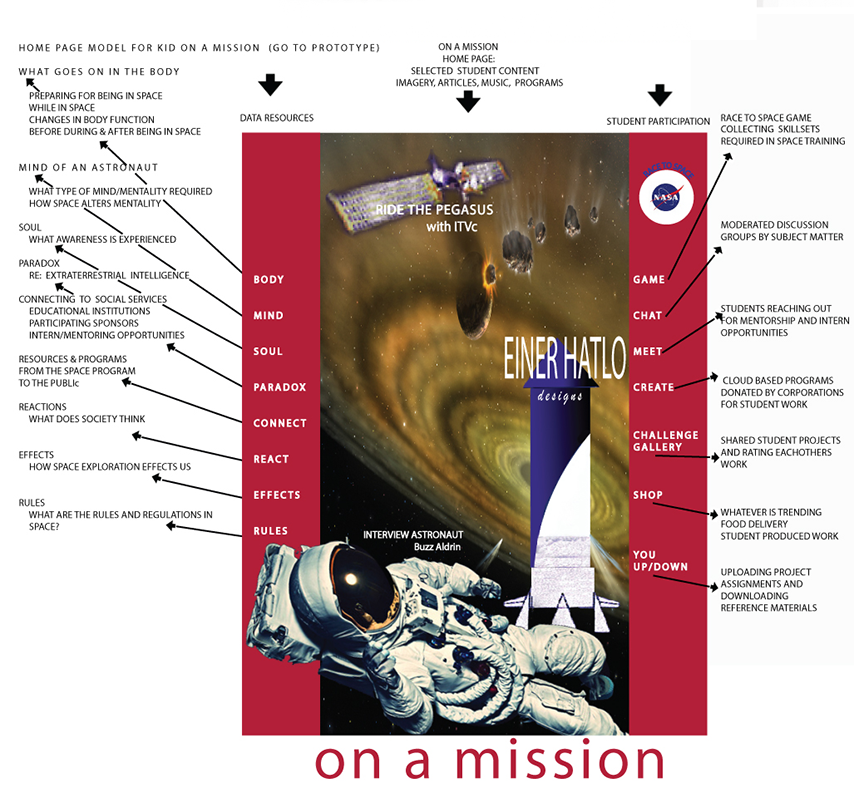
On a Mission
Displays work from students at the SF Academy of the Arts — a chapter built around personal mission and purpose, giving students a space to articulate what they're working toward and why. Search is intuitive, broken into:
- BodyPreparing for, while in, and after being in space
- MindWhat mentality is required, how space alters it
- SoulWhat awareness is experienced
- ParadoxRe: extraterrestrial intelligence
- ConnectSponsors, institutions, intern & mentoring opportunities
- ReactWhat does society think
- EffectsHow space exploration effects us
- RulesRules & regulations in space
- GameRace-to-space game, collecting required skillsets
- ChatModerated discussion groups by subject matter
- MeetReaching out for mentorship & internships
- CreateCloud-based programs donated by corporations
- Challenge / GalleryShared student projects, rated by peers
- ShopTrending goods, food delivery, student-produced work
- You Up/DownUpload assignments, download reference materials
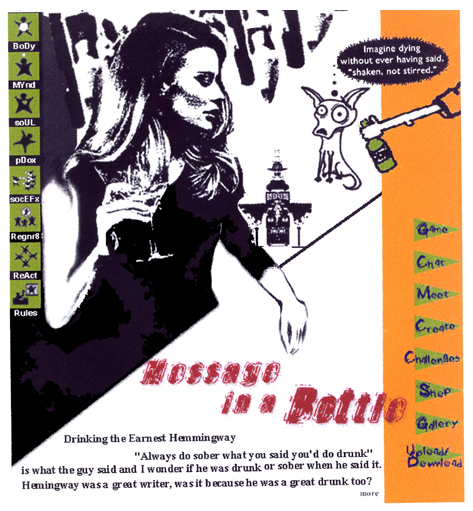
In a Bottle
Imagery modified from real advertising, fostered by the original vendors, so students reflect further on alcohol use when they encounter the unaltered imagery out in the world — building awareness of their place "in it."
Building self-esteem through relationship
Youtopia builds self-esteem by creating dynamic relationships between kids, teachers, and their universe. It's a framework that leverages student projects and your existing curriculum inside a shared cosmology — not a replacement for either, but a lens for both.
Join us in extending it.
The problem Youtopia was built for hasn't gone away
Youtopia's founding data was from the 1990s. The framework has aged well — the crisis it addresses has only deepened.